Working Holiday Visas (Subclass 417 & 462): Regional Work Rules
Ever dreamt of backpackers picking mangoes in Far North Queensland or rebuilding communities after a bushfire in regional Victoria? That's the magic of Working Holiday Visas (Subclass 417 & 462) – the...
The Lifetimes Australia editorial team curates, fact-checks, and updates guides on personal finance, property, health, immigration, legal, business, and lifestyle topics relevant to Lifetimes Australia readers. Articles are produced with AI assistance and reviewed by the editorial team before publication.
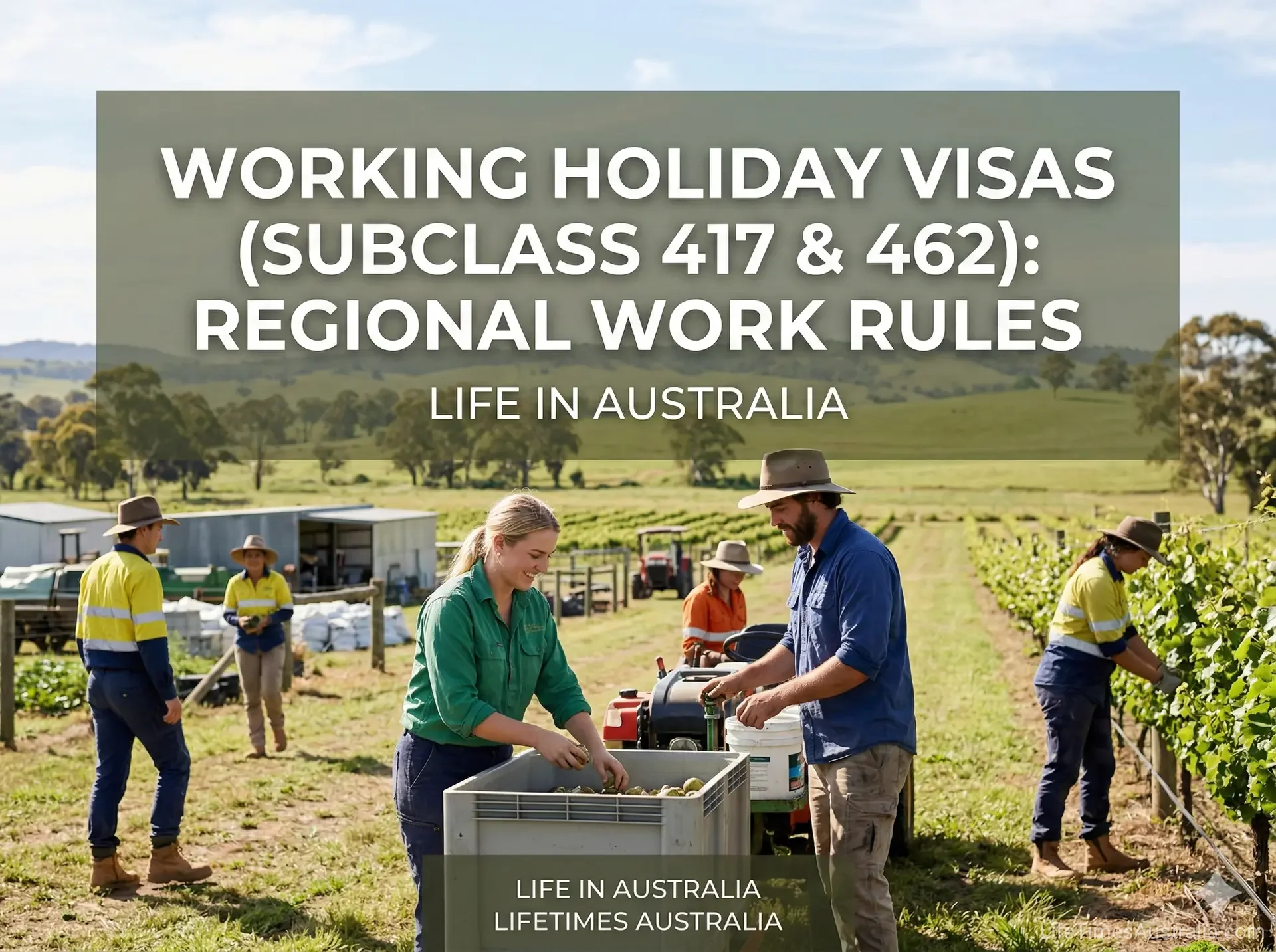
Ever dreamt of backpackers picking mangoes in Far North Queensland or rebuilding communities after a bushfire in regional Victoria? That's the magic of Working Holiday Visas (Subclass 417 & 462) – they're not just a ticket to adventure, but a gateway for young travellers to contribute to Australia's regional economy while funding their travels. For Aussies like us, understanding the regional work rules means helping mates from overseas navigate these visas, whether you're a farmer needing hands or a host recommending the best spots.
In this guide, we'll break down everything you need to know about Working Holiday Visas (Subclass 417 & 462): Regional Work Rules for 2026, from eligible industries and postcodes to extension tips. Whether you're employing visa holders on your property or just curious about how these programs boost our regional communities, we've got practical advice straight from the Department of Home Affairs.
What Are Working Holiday Visas (Subclass 417 & 462)?
Australia's Working Holiday Maker program offers two main visas: the Working Holiday visa (subclass 417) and the Work and Holiday visa (subclass 462). Both let eligible young people aged 18-30 (or up to 35 for some countries) stay for up to 12 months, work to fund their trip, and study short courses. The key difference? Subclass 417 is for citizens of countries like the UK, Canada, and Ireland, while subclass 462 covers nations such as the US, China, India, and Vietnam – often with extra requirements like post-secondary education or a ballot system for high-demand countries.
These visas are multi-entry, meaning holders can leave and re-enter Australia multiple times within the 12 months from grant date. You can't work for the same employer longer than six months, unless it's in regional industries like plant cultivation or mining.
Extending Your Stay: The Power of Specified Regional Work
Want a second or third year Down Under? Complete specified work in regional Australia for at least 88 days (about three months) for your second visa, or 179 days (six months) for the third. This paid work must follow Australian workplace laws, like fair pay under awards.
Recent updates make it easier: postcodes expanded on 5 April 2025 to include more disaster-recovery areas, and UK citizens (417) no longer need farm work for extensions if applied after 1 July 2024.
Eligible Industries for Specified Regional Work
Specified work fuels regional development in vital sectors. Here's what counts towards your visa extension:
- Tourism and hospitality in northern, remote, or very remote Australia – think chefs in Darwin pubs or dive instructors on the Great Barrier Reef.
- Plant and animal cultivation in regional areas – fruit picking in Stanthorpe, Queensland, or livestock care in rural NSW.
- Fishing and pearling – harvesting in Broome or regional ports.
- Tree farming and felling – planting or chopping in eligible postcodes.
- Mining – operations in the Pilbara or other regional sites.
- Construction – building infrastructure in outer regional zones.
- Disaster recovery – expanded in 2025 for bushfire or flood rebuilding.
COVID-era aged care and healthcare work in regional areas may still count for some, but check current rules.
How Much Work Counts?
Each full calendar day of paid specified work in an eligible postcode and industry counts as one day – no need for 88 consecutive days. Track your payslips and locations carefully for your visa application.
Regional Postcode Rules: Where to Work
Not all of Australia qualifies as 'regional' for specified work. The Department of Home Affairs lists eligible postcodes on their website – focus on areas outside major cities like Sydney, Melbourne, or Brisbane.
Key zones include:
- Northern Australia (e.g., postcodes starting 08xx for NT and far north QLD).
- Regional Victoria (e.g., Mildura 3500), NSW (Dubbo 2830), QLD (Bundaberg 4670).
- Remote WA (Pilbara mines), SA (Riverland), and TAS (most areas).
Use the DHA's postcode checker tool to confirm – search 'specified work postcode list' on immi.homeaffairs.gov.au. For example, picking grapes in the Barossa Valley (SA postcodes 511x-512x) ticks the box for plant cultivation.
Exceptions to the Six-Month Employer Rule
Normally capped at six months per employer, but unlimited in specified industries like fishing, mining, or disaster work – perfect for seasonal jobs on Aussie farms.
Practical Tips for Aussies Hosting Working Holiday Makers
As employers, we're the backbone of these programs. Here's how to hire legally and support visa extensions:
- Advertise on regional job boards: Sites like Harvest Trail (harvesttrail.gov.au) or Gumtree's regional sections connect you with visa holders seeking specified work.
- Provide payslips: Paid work only counts – use Fair Work Ombudsman templates for compliant payslips showing postcode, industry, and hours.
- Check VEVO: Verify visa status via Visa Entitlement Verification Online (free on immi.homeaffairs.gov.au) before hiring.
- Seasonal hotspots: Mangoes in NT (Oct-Dec), cotton in Emerald QLD (Jan-Mar), or truffles in Manjimup WA (Jun-Aug).
- Tax and super: Visa holders pay income tax like Aussies (ATO rates apply); they're entitled to superannuation if earning over $450/month.
Pro tip: Join the Regional Agriculture Visa Employer Forum via agrifutures.com.au for networking and compliance advice.
Common Challenges and How to Avoid Them
Visa holders often trip up on postcodes or unpaid 'volunteer' work – it doesn't count! Employers: Avoid cash-in-hand deals; they breach laws and invalidate extensions. Always reference the Fair Work Act for minimum wages (e.g., $24.10/hour casual horticulture rate in 2026).
"Only employment that complies with Australian workplace laws, including formal payment arrangements, is recognised as specified work."
Next Steps for Employers and Travellers
If you're an Aussie employer, post jobs today on harvesttrail.gov.au and check VEVO for compliant hires. Visa hopefuls: Download the postcode list, target Harvest Trail apps, and keep detailed records. For personalised advice, consult a registered migration agent via mara.gov.au. These visas keep our regions thriving – let's make 2026 the best harvest season yet!
Frequently Asked Questions
Sources & References
-
1
Specified Work for Working Holiday Visa for 417 & 462 Extensions — www.australianmigrationlawyers.com.au
-
2
Australia's Working Holiday Visa - The Complete Guide For 2026 — www.globalworkandtravel.com
-
3
Australia Working Holiday Visa 2026: How to Apply, Changes & Best Jobs — www.aussizzgroup.com
-
4
Working Holiday Visa Australia: The Ultimate Guide for 2026 — www.gap360.com
-
5
Complete Guide to the Australia Work & Holiday Visa 2026 — www.gooverseas.com
-
6
Specified work for Work and Holiday visa (subclass 462) — immi.homeaffairs.gov.au
-
7
Work and Holiday visa (subclass 462) - First Work Holiday — immi.homeaffairs.gov.au